
Water Damage Restoration Santa Paula, CA
Water coming through a ceiling, up through a slab or in under a door after a creek storm? The restoration team extracts it, maps the moisture and dries the house to the IICRC S500 standard.
(888) 578-6508Book the extraction crew 24/7Water spreading through the house right now?
Shut the main valve if it is safe, keep power off in wet rooms and photograph everything before moving furniture.
(888) 578-6508 Live dispatch, day or night (888) 578-6508Have a pump truck sent overWater problems the crews dry out
- Water Extraction
- Burst Pipe Water Damage
- Slab Leak Water Damage
- Sewage Backup Cleanup
- Storm Water Damage
- Flood Damage Cleanup
Water and sewage only, from the first extraction pass to the last dry reading on the meter. See all 15 services.
Water Damage Restoration Services in Santa Paula
Fifteen water and sewage services, each with its own page: what usually fails, what the crew does first, how long drying takes and what the job tends to cost here.
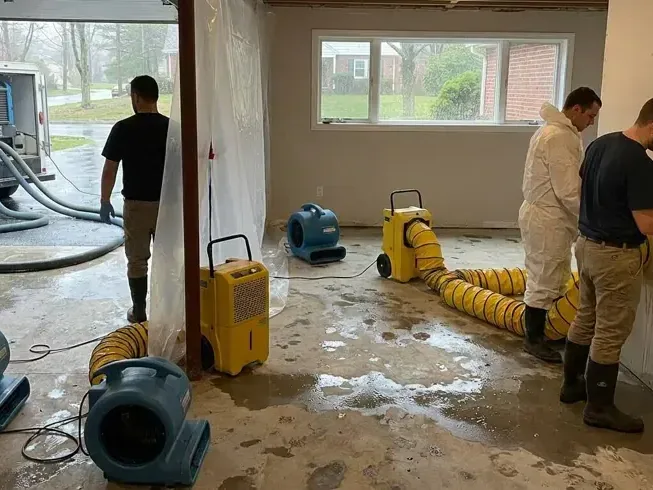
 Water ExtractionTruck-mounted and portable units pull standing water off carpet, tile and concrete before any drying equipment goes down.View service
 Burst Pipe Water DamageA split supply pipe can flood a room fast. Crews extract, open wet cavities and dry the framing to readings.View service
 Slab Leak Water DamageHot or cold water leaking under a 1960s slab soaks pad and baseboards from below; drying mats and pull-ups follow.View service
 Sewage Backup CleanupCategory 3 cleanup in full PPE: porous materials removed, surfaces cleaned and treated, then structural drying.View service
 Storm Water DamageWind-driven rain through windows, doors and roof edges gets extracted and dried before it reaches the framing.View service
 Flood Damage CleanupRising water from the creek or the street is treated as black water, with porous materials it touched removed.View service
 Roof Leak Water DamageAttic insulation, roof sheathing and ceiling drywall dried after a storm finds a gap in the roof.View service
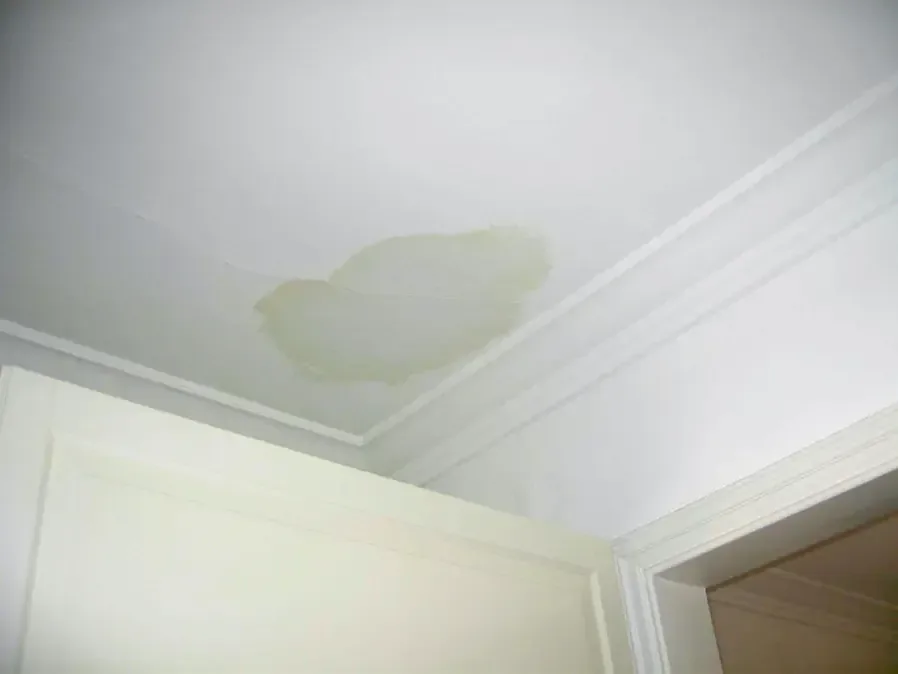
 Ceiling Leak Water DamageSagging or stained ceilings from an upstairs bath or roof leak get opened, drained and dried safely.View service
 Water Heater Leak CleanupA failed tank or relief valve wets the closet, the hallway and the slab around it; extraction comes first.View service
 Appliance Leak Water DamageWasher hoses, dishwasher drains and ice maker tubing leak under cabinets where water hides for days.View service
 AC Leak Water DamageA clogged condensate drain overflows the air handler closet during heat waves and wets drywall and flooring.View service
 Crawl Space Water RemovalWater under a raised floor is pumped out, wet vapor barrier replaced and the subfloor dried from below.View service
 Hardwood Floor Water DamageOak and pine floors in older homes get drying mats and slow, measured drying to limit cupping.View service
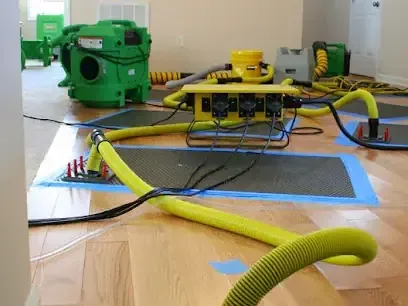
 Structural DryingAir movers, LGR dehumidifiers and daily readings bring framing, slab and subfloor back to a dry reference.View service
 Commercial Water DamageShops, offices and packing buildings dried in phases so the business can keep part of the floor open.View service
How a water loss is handled from the first visit
Stop the source
The response team walks the household through shutting the main or the fixture valve and cutting power to wet rooms.
Map the moisture
A technician reads walls, floors and cabinets with meters and a thermal camera, then sketches the full wet zone.
Extract and set drying
Truck-mounted extraction pulls standing water, then air movers and LGR dehumidifiers go in sized to the room.
Log until dry
Readings are logged daily and the equipment stays until materials sit within 2 to 4 points of a dry reference.
Coverage across Santa Paula and the Santa Clara River Valley
Crews work every block of 93060 and 93061, from the oldest downtown bungalows to the newer homes on the east edge of town.
ZIP codes
Not sure a crew reaches your street?
Give the cross street or the nearest landmark when you phone, and dispatch routes the closest crew. Ranch homes up the canyons are covered too.
Santa Paula, CA · [email protected]
See every area and community served
(888) 578-6508Give dispatch the cross street nowWhat a water damage dry-out looks like inside a house
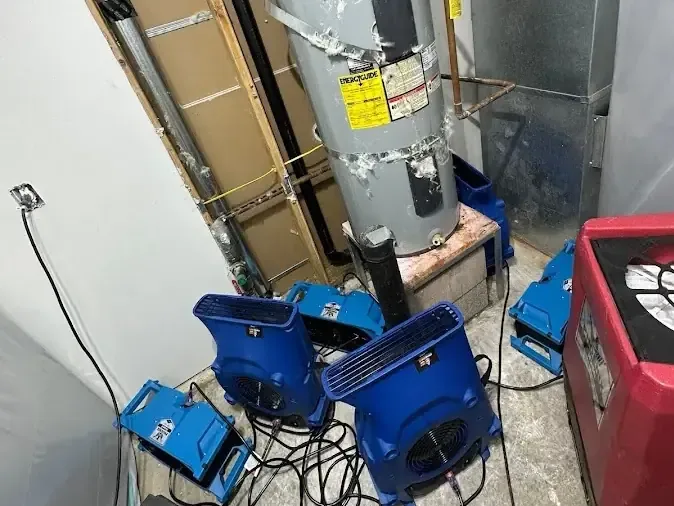
Built for valley homes, creek storms and slab floors
Most houses here sit on slabs poured in the 1960s or on raised floors near downtown, and each one hides water differently. The drying plan starts with that.
24/7 dispatch
Crews roll at any hour, nights and holidays included, because standing water keeps wicking into drywall and framing while it waits.
Readings, not guesses
Pin and pinless meters, a thermal camera and a hygrometer show where water went, including under cabinets and behind baseboards.
Claim-ready records
Every visit adds photos, a moisture map and psychrometric logs to one file an adjuster can follow.
Valley housing know-how
Slab tracts, raised-floor bungalows and craftsman homes each get a drying setup matched to how they were built.
How the IICRC S500 dry-out runs
IICRC S500 is the published standard for water damage restoration. It sets how water is classified, how drying is measured and when equipment can come out: when readings say dry, not when it looks dry.
- Inspect and classify. The tech identifies the water category and the drying class, then records both in the job file before anything is removed.
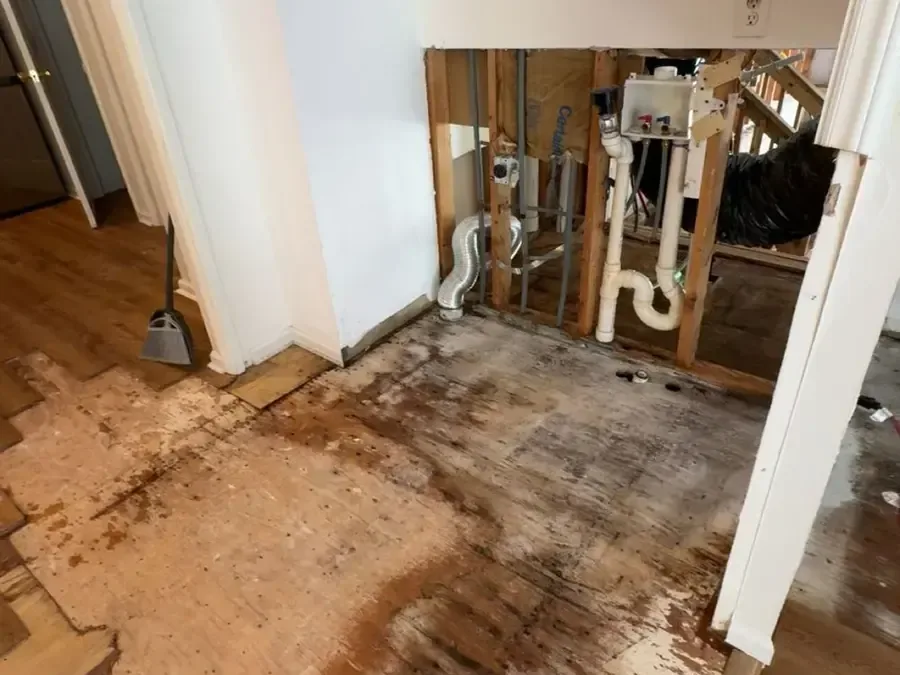
- Remove what cannot dry. Pad, soaked insulation and swollen particleboard come out; drywall is cut above the wet mark only where readings call for it.
- Dry with balance. Air movers, LGR dehumidifiers and sometimes desiccant units keep the air dry enough to pull water out of wood and concrete.
- Verify and hand off. Final readings are compared with an unaffected dry reference in the same house and logged for the claim.
Clean, gray or black: the water category sets the job
Clean water from supply pipes
Category 1 comes from a burst supply pipe, a slab leak or a water heater tank. Left to sit, it turns into Category 2.
Burst pipe water damageGray water from appliances
Category 2 carries soap, food or bacteria, like a washer discharge or a dishwasher drain. Porous carpet pad usually comes out.
Appliance leak water damageBlack water from sewers and floods
Category 3 means sewage or floodwater from outside. Crews wear PPE, remove porous materials and treat every surface.
Sewage backup cleanupWhat does water damage restoration cost in Santa Paula, CA?
Most residential water damage jobs here run from about $1,200 for one room of clean water to $10,000 or more for sewage or whole-floor losses. Water category, square footage, material class and how fast drying started move the number most.
One room, clean water
- Supply hose or small appliance leak
- Extraction plus 3 to 4 days of drying
- Baseboards off, little demolition
Several rooms or a slab leak
- Wet pad and lower drywall removed
- Slab or subfloor drying with mats
- Category 2 water or longer exposure
Sewage or creek flooding
- Category 3 cleanup in full PPE
- Porous materials above the waterline removed
- Antimicrobial treatment and rebuild prep
What the claim file should hold
An adjuster decides a water claim from the documentation. The restoration team builds that file from the first visit, so the loss is described in numbers instead of memory.
- A moisture map showing every wet wall, floor and cabinet
- Daily psychrometric logs of temperature, humidity and grains per pound
- Timestamped photos taken before any demolition starts
- The water category and the drying class, in writing
- An itemized scope of what was removed and why
Check your own policy
Most homeowners policies treat a sudden and accidental pipe burst differently from slow seepage, and standard policies exclude rising floodwater. Read the water damage section before anything gets thrown away.
Flood coverage usually comes from a separate policy. The crew documents the loss either way, but only the insurer decides what is covered.
These are typical ranges, not a quote. The written scope follows the walkthrough and the moisture map. For a quick number first, try the water damage cost calculator.
Why Santa Paula homes take on water
The city sits on the north bank of the Santa Clara River with Santa Paula Creek running through it and hills and canyons above. That mix brings runoff, creek flooding and aging plumbing.
1960s slab plumbing
The largest share of local housing went up in the 1960s, much of it on slabs. Copper and galvanized pipe under those floors can pinhole and soak pad and baseboards for weeks before anyone notices.
Raised floors downtown
Bungalows, cottages and craftsman homes near Main Street often sit over a crawl space, where a supply leak or runoff pools out of sight under the subfloor.
Creek and canyon runoff
Heavy rain moves quickly off the hills through Mud Creek Canyon and along the creek. Hurricane Hilary brought a flash flood warning here in August 2023.
Valley heat and AC
Inland heat waves push air conditioners hard. A clogged condensate drain can overflow an air handler closet and soak the drywall around it.
Rare hard freezes
Frost is uncommon but not unheard of: during the December 1990 freeze, county firefighters logged at least 30 calls about broken water pipes.
Early 2023
Winter storms flooded and eroded Santa Paula Creek, damaged ten of its 24 spur dikes and left one creekside home red-tagged.
Water damage questions from Santa Paula homeowners
Water still coming in right now?
Skip the reading for now. Shut the source if it is safe, then phone and the response team walks the household through the next steps.
(888) 578-6508 (888) 578-6508Talk through the shutoff stepsHow quickly does a crew reach a house in Santa Paula?
Dispatch runs 24/7 and the nearest available crew is sent once the address and the source are known. Every water loss is treated as urgent, so extraction starts on the first visit whenever the scene is safe.
What should be done before the crew arrives?
Shut off the main or the fixture valve, switch off breakers feeding wet rooms, lift rugs and valuables off wet floors and photograph everything. Do not run a household vacuum on standing water.
How long does structural drying take?
Most clean water losses dry in 3 to 5 days. Slabs, hardwood and plaster walls in older homes can take longer. Equipment stays until materials read within 2 to 4 points of a dry reference.
What is the IICRC S500 standard?
It is the industry standard for water damage restoration. It defines water categories and drying classes and calls for moisture readings that prove a structure is dry before equipment is removed.
When does drywall have to come out?
When it stays wet after extraction, when it soaked up gray or black water, or when the insulation behind it is saturated. Drywall wet with clean water that dries within readings can often stay.
Why is a sewage backup handled differently?
Sewage is Category 3 from the start. Crews wear PPE, remove porous materials above the waterline, clean hard surfaces and apply an EPA-registered antimicrobial for its full dwell time.
Will homeowners insurance pay for the damage?
Many policies cover sudden and accidental water, like a burst pipe, but not long-term seepage or rising floodwater. Check your own policy; the crew documents the loss either way.
Why do slab leaks show up so often here?
Much of the housing dates from the 1960s, with water pipes under the slab. Age, ground movement and water chemistry wear the pipe until it pinholes and wets the floor from below.
How is the cost of a water damage job figured?
By water category, square footage affected, the materials involved and how long water sat before drying started. An itemized scope follows the walkthrough.
Is creek floodwater cleaned the same way as a pipe leak?
No. Floodwater from outside is Category 3 and is handled like sewage: porous materials it touched come out, and surfaces are cleaned and treated before drying starts.
Wet floors, a dripping ceiling or a backed-up drain? Get the drying started
Every hour water sits, it wicks higher into drywall and deeper into wood. Phone the dispatch desk at any hour.
(888) 578-6508Book a dry-out visit now